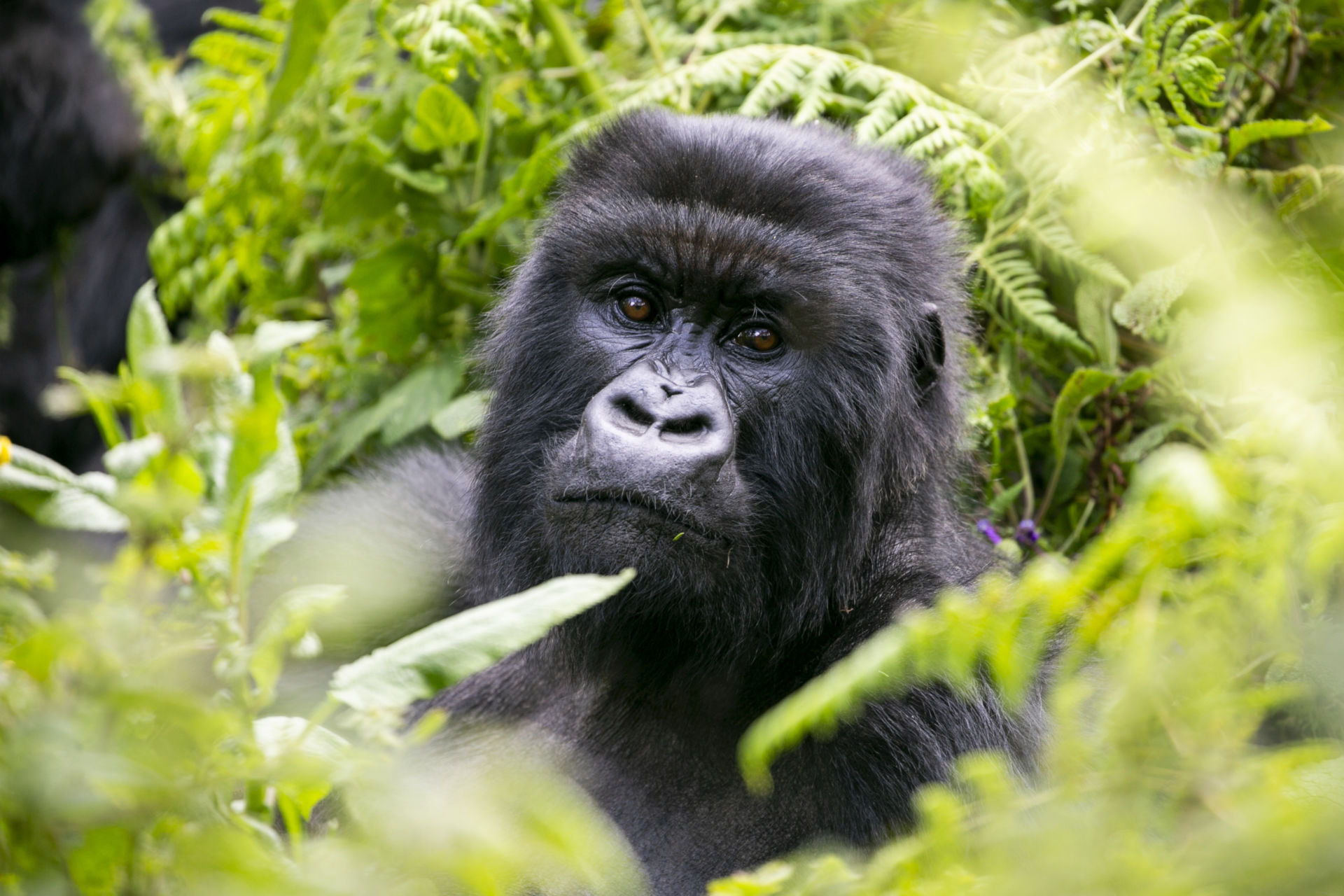
Nestled deep within the lush rainforests of Uganda lives one of the world’s most awe-inspiring and endangered primates: the mountain gorilla (Gorilla beringei beringei). These gentle giants are a subspecies of the eastern gorilla and are found in only three countries in the world—Uganda, Rwanda, and the Democratic Republic of Congo. Uganda, however, boasts nearly half of the world’s remaining mountain gorilla population, making it a vital hub for their conservation and protection.
Where to Find Them
Uganda is home to two main gorilla habitats:
Bwindi Impenetrable National Park, a UNESCO World Heritage Site known for its dense rainforest and remarkable biodiversity.

Mgahinga Gorilla National Park, part of the larger Virunga Conservation Area, which stretches across the borders of Uganda, Rwanda, and the DRC.

Both parks offer guided gorilla trekking experiences that allow visitors to observe these animals in their natural habitat—a life-changing experience for many.
Life in the Forest
Mountain gorillas live in close-knit family groups led by a dominant silverback male. These groups typically consist of several females, their offspring, and sometimes subordinate males. Despite their size and strength, mountain gorillas are surprisingly gentle and shy, spending much of their day foraging for food, grooming one another, and resting.
Their diet mainly consists of leaves, shoots, and fruit, and they play a crucial ecological role by helping spread seeds throughout the forest.
Conservation Success Story
In the 1980s, the population of mountain gorillas was dangerously low, with only a few hundred individuals left. Thanks to coordinated conservation efforts, including anti-poaching patrols, habitat protection, and eco-tourism, their numbers have been slowly increasing. As of recent estimates, there are just over 1,000 mountain gorillas in the wild—an incredible recovery, though they remain classified as endangered.
Uganda has been a leader in this success, using sustainable tourism as a way to fund conservation and support local communities. Gorilla trekking permits are strictly regulated to limit the impact on the animals and their environment, and part of the fees go directly to community development projects.
The Role of Responsible Tourism
Visiting mountain gorillas is a privilege, not a right. Tourists are required to follow strict rules to minimize stress and disease transmission to the gorillas. These include keeping a safe distance, not making sudden movements, and staying silent while observing the animals.
For those who take the journey, the experience is often described as humbling and unforgettable—standing face-to-face with a wild gorilla in the misty forests of Uganda is a rare encounter with one of our closest relatives in nature.